Full Disclosure: Product Substitutions

I’d love to tell you that I just stick to buying these 8 products, but the truth is that I still have some of that experimental energy that I had long before I started my curly transformation. In other words, I don’t try every product I see on the shelves that promises sleek, shiny, frizz-free hair, although I am tempted. No, my better-educated self turns every product right around to look at ingredients before even considering trying something new.

As I’ve mentioned on the Products page, hair likes to shake up the routine. If you use the exact same things the same way every day, your hair will start to lose some of its luster and it will get very monotonous and boring. Using varying amounts of a product, or experimenting with different application techniques can help, but if you take a total break from those products for about a month, you’ll notice that your hair is happier when you return to using them. That’s why I usually have at least one alternative to every product I use regularly. Below is a list of some of those substitutions, and how I like to keep things interesting.
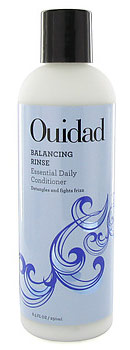
1) Conditioner: This work horse may contribute the most crucial element to your hair’s health and appearance. Too much and it may look greasy, too little and it looks and feels dry and becomes more prone to breakage. When I want to take a break from Devachan’s One Condition, I use Ouidad’s Balancing Rinse conditioner. I’ll use it for maybe a week before switching back to One Condition, because it does eventually leave my hair feeling a bit less moisturized than I’d like. It’s a thinner formula so that may contribute to it. I also like Argan Oil conditioner, but wouldn’t use it more often than once a month or so.

2) Styling Gel: There are so many ways to take a break from gel. You can use only one gel for slightly less hold and control, instead of using one in the shower pre-towel-drying and one as a finishing gel immediately after towel-drying. You can use different finishing gels, although I always like to keep Devachan’s Angell as my base. I love Ouidad’s Climate Control, but surprisingly I couldn’t stand Curl Quencher on my hair. I’d suggest going to their site, they have it set up a lot like naturallycurly.com now and you can shop by curl type. I also like Devachan’s Volumizing Foam when I want a much less contained look, and I substitute this for finishing gel, while still using the Angell base.

I never use any creams, however. I’ve tried so many, and recently tried Carol’s Daughter’s Hair Milk (which had great moisturizing ingredients, by the way, so it probably left my hair better off in the end) but it didn’t hold my curl at all, which meant that day 2 I already needed to wash and re-style. I like when I can go at least 3 days between washes, which means the perfect balance between not-too-dry and not-too-greasy product application.

3) Hair Treatment: I recommend using some form of hair treatment, be it oil or deep conditioner, at least once a week. You can use those little bottles of essential oils on your ends, you can use a great deep conditioner like DevaCurl’s Heaven in Hair, you can use any of the homemade treatments in Curly Girl, including a slight variation on the amazing Oil Treatment featured on my site, or you can try some great conditioning treatment that you find on your own, as long as it has the key moisturizing ingredients high on the list, and not too many that you can’t pronounce toward the bottom. As always, look for any types of oils, glycerin and glycol derivatives, aloe, and words that you understand first. If there are any ingredients you don’t understand, Google them. You’ll be surprised at how quickly you can recognize them once you’ve looked them up.

4) Refreshers: Lastly, I want to be sure that I hammer home how much I love Cold Spring Apothecary’s Citrus Ginger Sea Salt Spray to revive second- and third-day hair. There are a lot of these on the market now, but you have to be sure that they have moisturizers to counteract the drying effect of sea salt. When I use only four pumps distributed throughout my hair by tossing it back and forth, it re-awakens my hair and re-defines lost curls. I only use this when I really feel that I need it, and always use it sparingly. Don’t add this to your hair if it feels like there’s already too much product in your ‘do.

Extensions: Do or Don’t?

As a curly girl, I’ve often considered the merits of extensions to add volume and length to my hair. I’ve never understood how curly extensions would work, though, especially in a weave (which stays in for roughly three months full-time, sans clips) when you get sweaty, knotty, or wash it. I know that curly weaves have been around for quite some time, but the logistics were lost on me. Plus, is it worth getting them? Does it damage your hair?

Courtesy: Lugo's Hair Center

I pondered these musings with my hairdresser recently and was told that she opted for weave extensions when she had her hair tragically shorn by an un-knowledgable stylist. She was sick of waiting for her hair to grow out, so she went full-steam-ahead and had real human hair incorporated into her own. I asked whether this was damaging, and she grimaced and suggested getting the clip-in kind if I was worried about damage.

Also, it’s important to consider that there are different hair types. While ethnic hair is actually more brittle than caucasian hair, there is also a lot more of it to begin with. If I were to get a weave and have to thin out some of the frayed or damaged pieces once I removed them, I’d look half bald. Not a good look for anyone.

The stylist direct me to Lugo’s Hair Center, which is a weave and extension online shop that specializes in curly human hair. It’s permed so the curl will stay intact when you wash. You purchase the hair and have it attached to clips, or bring it to your salon to have it weaved in with your natural locks. There is a broad color palette and they pride themselves on their deft color-matching service.

I personally opted out of the weave, but I may still try the clip-in extensions at some point. They’d probably look amazing with fancier do’s (think weddings, prom, cocktail parties, special events, etc…).


The Skinny: DIY Deep Conditioning

We’ve all seen the little tubes of hot oil treatments in the hair product aisles of our favorite supply stores, but I’m sure that you’ve also noticed the squat tubs of deep conditioners that have become ever-so-popular among most hair brands over the past decade or so. They promise to add shine, restore thickness to thinning locks, tame frizz and more. Some say to leave the treatments in for 5-10 minutes, others only 3. What’s the difference and what does it all mean?!?

Last night I treated myself to a deep conditioning treatment at Devachan Salon in Soho, and I took the opportunity to grill my stylist. First of all, why is this treatment any better than my purchasing their deep conditioner and doing it at home? Here are some tips she had that will offer you the first-class treatment from your couch.

1) The deep conditioner has to get into every nook and cranny on your head, including your scalp. After thoroughly wetting hair down with warm water and then squeezing it mostly dry, the stylist recommended separating hair into sections, like you see when women are getting their hair braided, except larger sections are fine. You work it into each section thoroughly, and run a dab of it along your scalp line between sections. It helps if someone else can help you with this since you can’t see your own scalp, but you can feel it out and maybe do this in front of a mirror to help.

2) As with the oil treatment, you should then cover your head with a plastic shower cap. This holds in moisture like a mini-ecosystem, allowing any lost moisture to be re-absorbed. Put a long piece of cotton, or rolled up paper towels along the edges to hold a tight seal, and prevent any conditioner from leaking down your neck.

Revlon hooded dryer: $33

3) If you have room, and this is very important, buy a mini (haha) hooded dryer. They aren’t as expensive and ridiculous as you think, although there is a range, it’s just hard to find a place to keep it in a tiny chock-full apartment. If you want to save moolah on expensive conditioning treatments, though, I highly recommend it.

4) Lastly, it’s recommended to leave the treatment in, sitting under the dryer, for at least half an hour. It’s pretty loud so watching TV may be a challenge, but you can read magazines and just pretend you’re in some fancy salon!

When it comes to the difference between an oil treatment and a deep conditioning treatment, I think it’s one of those things where two is better than one. Both have their purpose. I’ve read that olive oil particles are too large for hair to absorb, but I know that they have a great, lasting effect on my hair when I use them. I’d say that both treatments have their place.

As for which deep conditioner brands to buy, just make sure that they have lots of moisturizing elements, such as glycerin, aloe, any kind of oils and butters; and as always these ingredients should be high up on the list. My favorite brand, of course, is Devachan’s Heaven in Hair. Most others will be comparable, though, just make sure that they don’t have alcohol (drying) or harmful sulfate and chloride ingredients. The oil treatment can be made at home. Happy conditioning!

My Soapbox

Good morning friends! So, I don’t mean to sound like I’m preaching at you all from atop my lofty soapbox, but I just have to be serious for a few minutes. Bear with me.

I’m sick and tired of being inundated with glossy magazines telling me what trends I should try, how I should look, what I should wear, and how I should look while wearing them. Usually it’s based on some stylist’s ideas, or celebrity looks, and as someone who used to work in the glossy industry I can tell you it’s mainly BS. Everything is written and photographed and manufactured to sell–sell clothes, accessories, make-up, hair care products, and advertising for the worst of the above. I mean everything.

When I worked for a certain shall-not-be-named publishing house, the magazines had sample sales where large conference rooms would be crammed with TONS of unused make-up, hair products, and even clothes and accessories. Literally, it would make you sick. Or filled with the glee of a 5-year-old on Christmas morning. These items were all sent to the writers completely free and completely full-sized, we’re not talking small samples here. Whenever a magazine features a product, look, or style, there is most likely some advertising or partnership behind it.

So while I’m probably damaging the prospect of any magazine favoring my blog henceforth, I just can’t pretend I don’t feel this way. So the jig is up, ladies and gents, I am saying it’s OK to be the way you are, just be the best of yourself. That’s what this blog is all about, finding a way to be happy and in love with the hair you were given at birth, and how to make it shine.

I guess that’s my mission statement!

Oh and I still love my magazines, don’t get me wrong. They are crammed with lots of helpful and fun tips, stories, and important health information. Just be sure to take some of it with a grain of salt. Figuratively speaking, of course 🙂

Allergies and your hair

Spring brings more than pretty flowers! Read on for another easy way to combat seasonal allergies.

Hello, friends! Those readers who are currently experiencing springtime may notice that the allergens are in abundance, and have been for a few weeks already. Warmer weather earlier in the season (and in some cases, an almost non-existent winter) has created the perfect storm for a heavy-hitting allergy season. Aside from the usual <obvious> ways to avoid constantly red eyes, runny noses, and itchy skin, may I also remind you that your hair is a huge attractant for almost everything airborne?

We know that dirt is attracted to and sticks to our hair, partly because we add products and partly because that’s what hair is actually supposed to do, so the same is obviously true of pollens. Because of this, I’m trying to at least wet down my hair every night before my head hits the pillow, and it seems to be helping so far. While it’s not ideal for most curly girls to wash right before bed (air-drying becomes a bit of a problem) it’s not a bad idea to at least rinse your hair off, and then you can do the full routine in the morning. It’s also a perfect excuse to use oil and protein treatments more often, since you usually want those to sit on your hair overnight anyway!

If you are going to bed with wet hair I suggest wrapping it in a microfiber hair towel, and by the time it falls off in the middle of the night your hair should be mostly dry. Added bonus: Something about going to sleep with a soft towel snug around my head makes me feel like I’m at a spa or something. Try tying your hair on top of your head first if you don’t want it to come loose and get matted around your neck while you toss and turn. Then enjoy a nice, clean, sneeze-free night!

Start Curly

One minor thing I’d like to address is that every hair styling tip I read about in magazines instructs you to blow-dry curly hair straight first. The tousled look, for example, involves blow-drying your hair in all different directions, then curling the ends, and texturizing it with pomade. Straighten my curly hair only to curl it again? Wha…? What these articles do is convince us to buy a ton of pricey products that aren’t all that great for our hair, make our ‘do’s high-maintenance, and promise shiny frizz-free results that we all know just aren’t going to happen. Especially as the warm and humid spring and summer months approach.

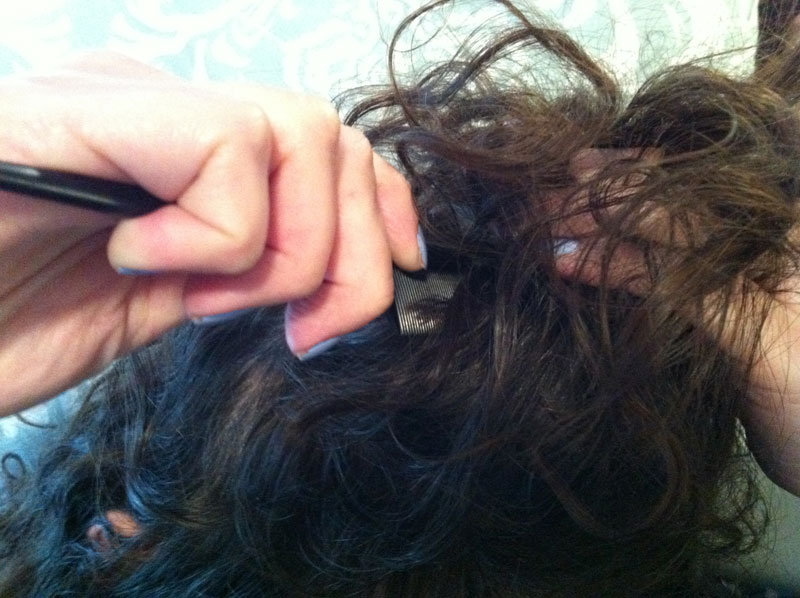
Back-combing can be done with a small black comb to create height near the roots of hair. Do not comb your hair to the ends with this!

My theory is work with what you’ve got: You have curly hair and you want it tousled? Fine, tousle it. Tousle ’til your heart’s content! I picked up a new trick over the weekend that I love. I’ve already recommended using a wide-tooth comb if you absolutely need to comb your hair while it’s wet in the shower, but I was recently given an olive-oil infused wide-tooth comb that I LOVE. I haven’t combed or brushed my hair (except when straight) in almost a decade, so this is kind of a big deal. I already knew you could use a small comb (like the flimsy black ones they gave you before school pictures) to add body at the roots of your hair. It works like back-combing, you brush against the direction of the hair at the very roots and get some upward movement.

Olive oil comb--great for combing through shorter layers to loosen curls and create a more "tousled" look.

The olive-oil comb, however, is so silky-smooth and non-invasive that I find I can use it with my shorter layers, like bangs, and also use it to back-comb for body on the crown of my head. It loosens up my curls, making them look a bit more fun and frisky instead of orderly and controlled. If you want to add texture try spritzing with some spray gel or the Coldstone Apothecary salt-water spray I mention on the products page once you’ve achieved your desired look.

If you do choose to gently comb through your hair to the ends with the wide-tooth comb, wrap unruly curls around your finger to eliminate frizz.

Also, once you’re done combing and before you use product, try finger-curling the rowdier pieces to make the hair come together in harmony again instead of being too frizzy. The amount of combing you do depends completely on how much of a statement you want to make, and over time you may find yourself doing it more and more. It’s also a great way to add height to hair that has dried somewhat flat on top.

Good Guide

Good morning fine friends! I’m going to take a rare foray away from hair-specific talk to inform you about one of my favorite sites that will help you with organifying and cleansifying your lives in more ways than are detailed in this blog. It’s a site called GoodGuide, and if you haven’t heard of it you should definitely take a look.

Basically it’s a place where you can search for the products in your home, or products you’re thinking about buying, that you use regularly, and you’ll get the health and environmental low-down. Toothpaste, conditioner, hand soap, baby shampoo, the works. Each is rated on a 1-10 scale based on Health factors, Environmental impact, and Society–whether the company gives back to its community.

The products I recommend on my site are healthy and hair-friendly, but if you want to try to find something a little less expensive that won’t be damaging, this is the place to start your search. I hope that sites like this one start to influence big company’s business practices so that these important keystones of corporate responsibility will become the norm one day. Have fun, and here’s to your health!

The Curly Shag

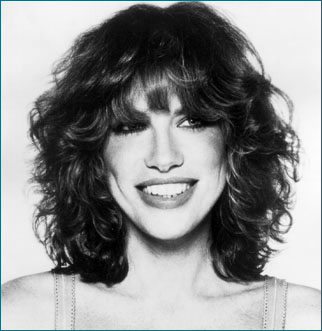
courtesy: seagullhair.com (No, this isn't me. I wish!)
This will work for curly hair of any type, as long as you don't cut layers too short. Be sure that you have it cut while your hair is dry!

I love my hair cut. Best part is, it works with any curly hair type. I have what I like to call a “curly shag,” a la the image to the left.

I needed to have more body on top, so one day I just started snipping layers around my face, since my long hair was dragging way too much. Right away I noticed that the curls came back to life, and my hair started drying much more quickly. It’s a great way to thin out thick hair, while adding volume and bounce for thin hair, since shorter top layers aren’t as weighed down. Great for a spring look if you don’t want to lop all of your hair off.

This cut is also very easy to manage! I recommend pairing it with wispy bangs that gradually get longer going from the middle of your forehead toward your temples, then blending that with your longer layers.

Let’s Talk Follicles

As if you’d ever need a reason to become forever devoted to maintaining your gorgeous curly mane (ha!), you may be interested to know that there is no known non-surgical way to permanently straighten your hair. Some of us have tried various techniques, and I’ve heard friends say, post-keratin/chemical straightening, that they have found that their hair has grown out much less curly. Some even turn straight, God forbid!

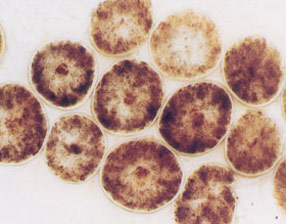
The truth of the matter is, your hair is curly because your hair follicle, which is grown in a tiny sac beneath your scalp, is oval-shaped. The curlier the hair, the more oval-y (?) the follicle is. Case and point, here is the cross-section of a piece of African American hair (right). This is the extreme, a wavy or loosely curly hair follicle would be much more circular.

Conversely, if you have stick-straight hair, your hair follicle is a circle. As the hair grows down your back, the shape of the follicle determines whether it spirals down or hangs straight. Take a look at this Asian hair follicle (left).

Now, the health-conscious reader may wonder to themselves as to what chemical reaction could possibly cause permanent hair relaxing, if this is indeed possible. It’s quite alarming that a hair treatment might affect the shape of the hair that grows from a fixed-shape follicle in our scalps. Other factors may also be affecting it, like any big life event that changes your body as a whole, such as aging, a major surgery or — pregnancy! This is why many of us notice that our hair changes after having kids. I say, learn to love it and always keep your hair well-hydrated with monthly if not weekly oil treatments. Dehydration is one of the biggest reasons that curly tops become unhappy with their natural locks.

It’s science, really.